What My Breast Cancer Journey Taught Me About the Places Where We Get Care
Three and a half years ago, I got a call at Costco while I was with my daughter. They told me I had breast cancer.
It didn't go fast. It was more like I floated. I floated through my diagnosis, my surgery, my treatments. I had to stay really strong for my kids, and it was a lot.
I've written about my diagnosis before in an earlier post here on the website. See it here. This one's about something else. Because what you don't realize when you have cancer is that it's a long road. It doesn't just go away. And since it's Breast Cancer Awareness Month, it feels like the right time to talk about what comes after, and how it's changed me as a person and as a healthcare designer.
After chemo, I had such bad chemo brain. Doctors call it cancer-related cognitive impairment. It messes with your memory, your focus, how fast you think. I couldn't get my shit together. I couldn't run my business. So I took about a year off from my healthcare interior design business. I had to.
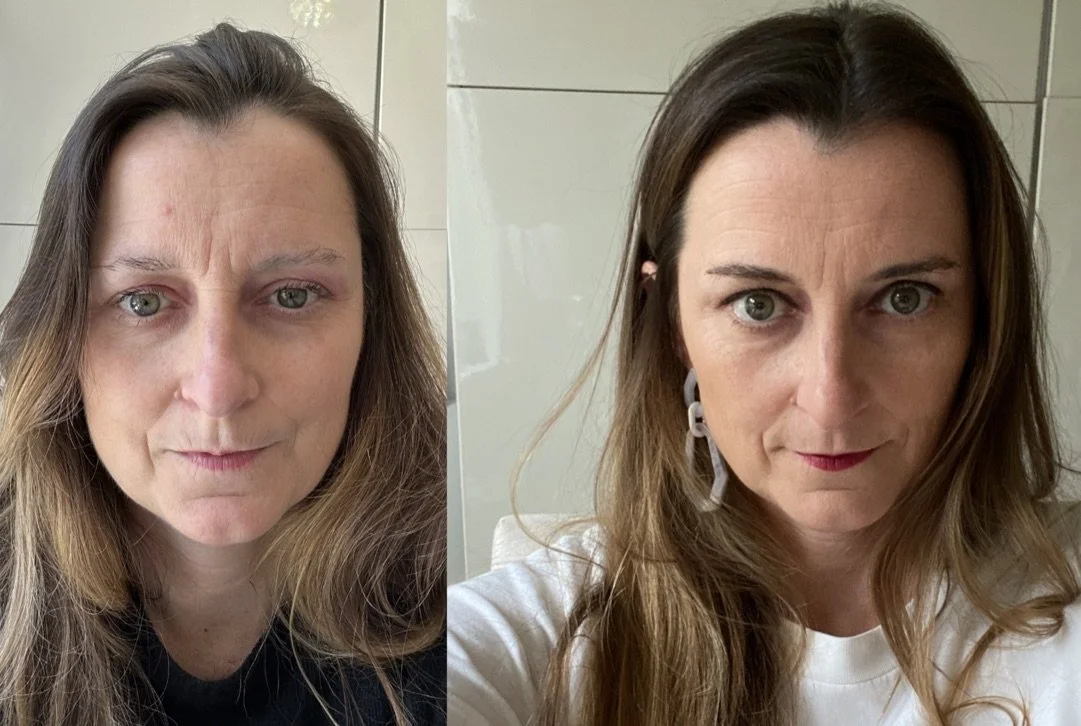
I went to India. I studied astrology. I spent more time on my art. I hired a very qualified business coach, one I really had to invest in. And I looked at my life holistically, which, I will say, is what we do in design. We look at a space from this lens where you see all the pieces together at once. That's what I did with my life. It was the first time I really looked at it like that and was honest with myself about what was working and what wasn't. I was pushing myself to do more and more in this design career, and I was burning myself out. I wasn't taking time to smell the flowers, meditate, take care of myself, or have slow mornings.
Fast forward to now. I've slowly gotten my business back up. I've launched an art line. And one of the reasons all of this is coming back up for me is the pain I'm having in my shoulder.
After a year of really intense yoga, I switched to Pilates and hurt my shoulder really bad on the reformer. I went to my oncologist appointment and told her about it, and she was worried the cancer had metastasized into my shoulder. When you're three and a half years past your diagnosis and your oncologist tells you something like that, the feeling is hard to explain. The chemo nearly killed me. The thought of doing it again is a really tough pill to swallow. Especially when I'm already swallowing a hormone-killing pill called Tamoxifen for 5 years. I know I could do it if I had to. Obviously I would. But I do not want to put that poison in my body again. I think it would age me in ways I can't even explain.
I got an MRI last weekend. There's fluid in my shoulder, and it's not metastatic cancer. That's great news, obviously. But it leaves me with a lot of pain, PT, and potentially surgery. My acupuncture doctor thinks it could be cordage, all related to my lymph node removal and lumpectomy.
So I spend a lot of time in doctors' offices. Which is actually really beneficial to my clients. The more you're in healthcare spaces, the more you understand the flow and what's working and what's not in the patient experience.
So for the next part of this blog, I want to talk about the cancer clinic experience as a whole. I don't want to sit here and judge my cancer clinic. But I do think it's important that I notice and articulate the things that aren't working in the cancer space. I'm a boutique healthcare designer here in Raleigh. It's me and my assistant Maria, and we're building something that's not part of a conglomerate. I'm really proud of the work we're doing, and I think we come to it with a different perspective.
I'd like to talk a little bit about how I would design a cancer clinic differently.
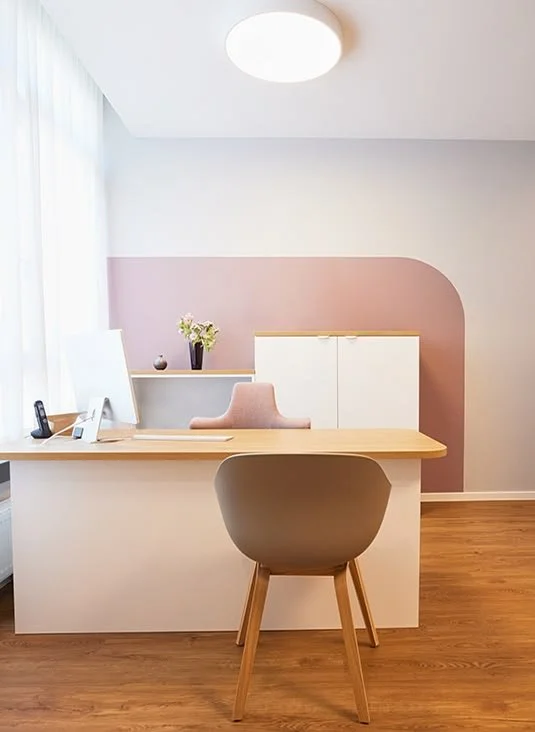
The Wig Shop: Bringing Retail Thinking to Women's Health Design
It's not modern enough. The cabinetry is dark. The signs are wrong. And I don't understand why everything has to have this pink ribbon breast cancer look. I get using a little bit of pink, but the graphics feel so overtly branded with the ribbon. It's almost like a mom-and-pop wig shop.
We're in an era where it's important that things are merchandised. I spent fifteen years in fashion, and I think these shops should be applying fashion retail cues. Lighter, modern cabinetry. Signage that's clean and current. Wigs displayed the way a good boutique displays its pieces. A touch of pink if you want it, but let the space feel like a place you'd actually choose to shop.
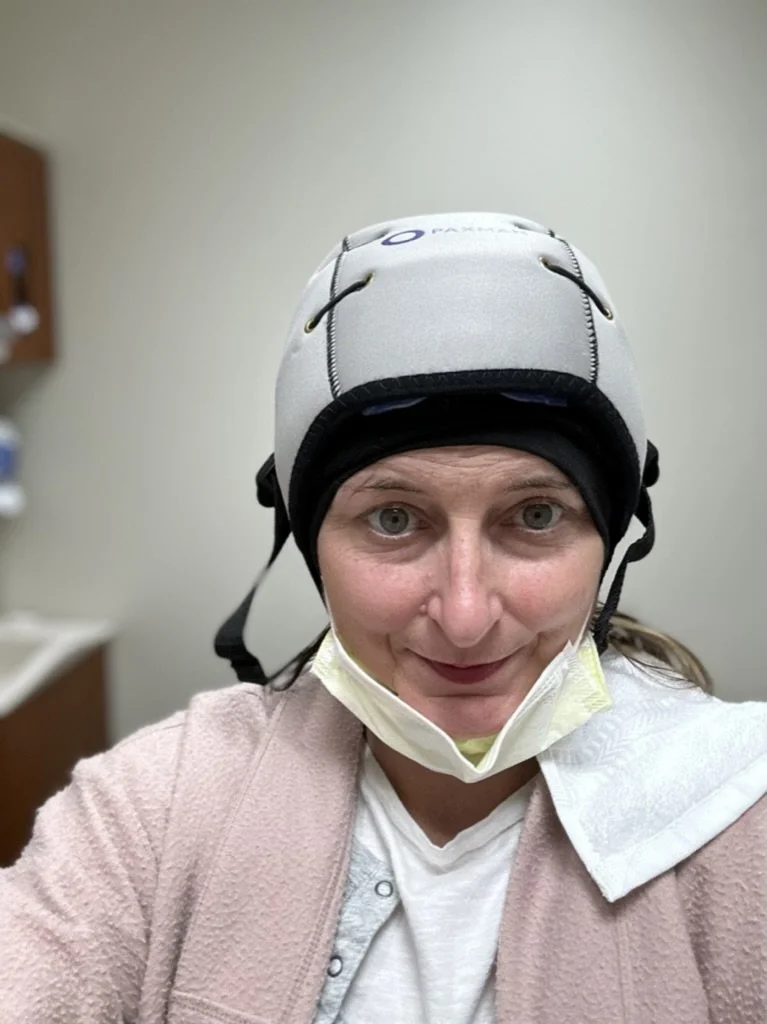
Preparing to Cold Cap: A Gap in Patient-Centered Design
If you haven't heard of cold capping, it's also called scalp cooling. You wear a cap that gets extremely cold during chemo, and the cold helps protect your hair follicles so you have a chance of keeping your hair. But there's a lot of preparation and a lot of learning that goes into it. You have to wet your hair and put conditioner in it first. And the cap has to fit exactly right. If it's not on your head the right way and every part of your scalp isn't getting that cold, you can lose your hair in those spots.
So there really needs to be a separate space where you go in, get your hair wet, and get ready. There was no space. I was in an exam room. They told me I needed to bring my own towels and conditioner. But really, those things should be there for you, and someone should help you get ready. They were very kind, but there's not a true process for cold capping yet, and they're unfortunately not set up for it. We're talking about one of the most traumatic experiences of a woman's life, when she's about to lose all her hair.
As more and more women cold cap, centers need a real prep room. A sink. Conditioner. Towels. Think "salon". Staff who are trained to help. Honestly, that's a whole other blog.
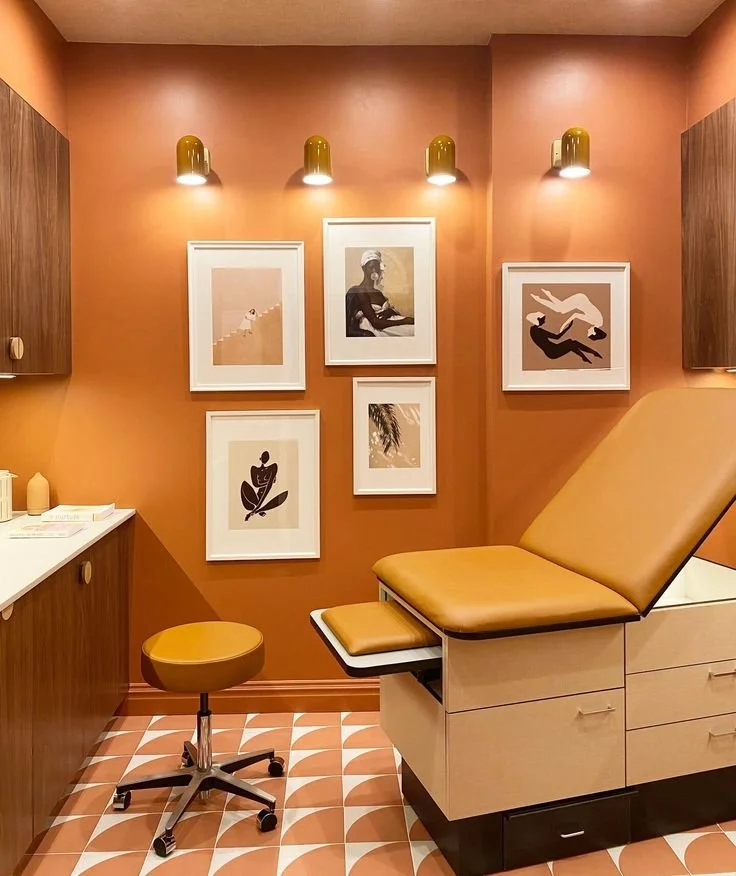
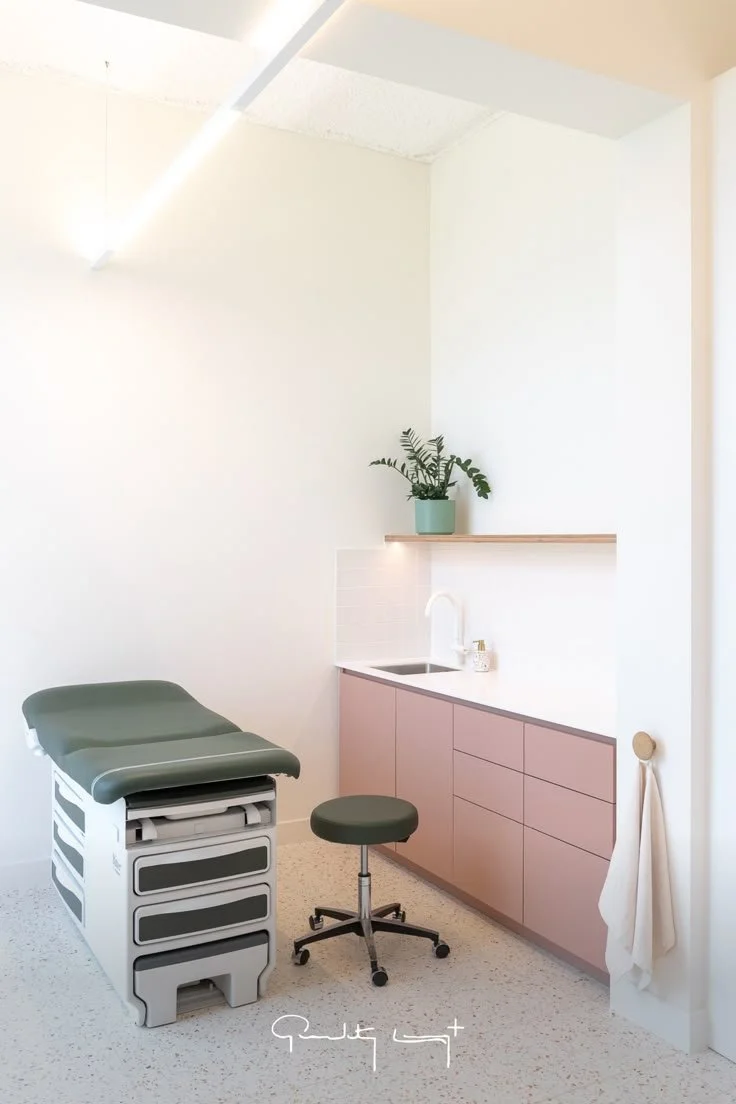
The Exam Rooms: What Spa Design Can Teach Breast Health Care
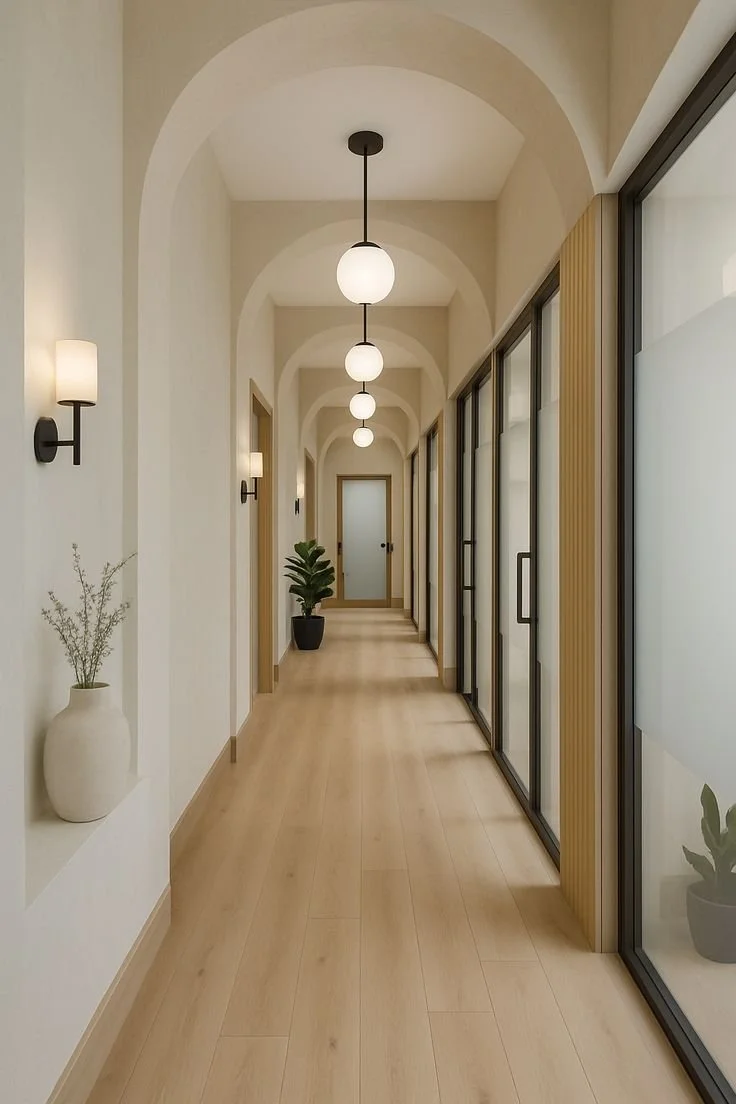
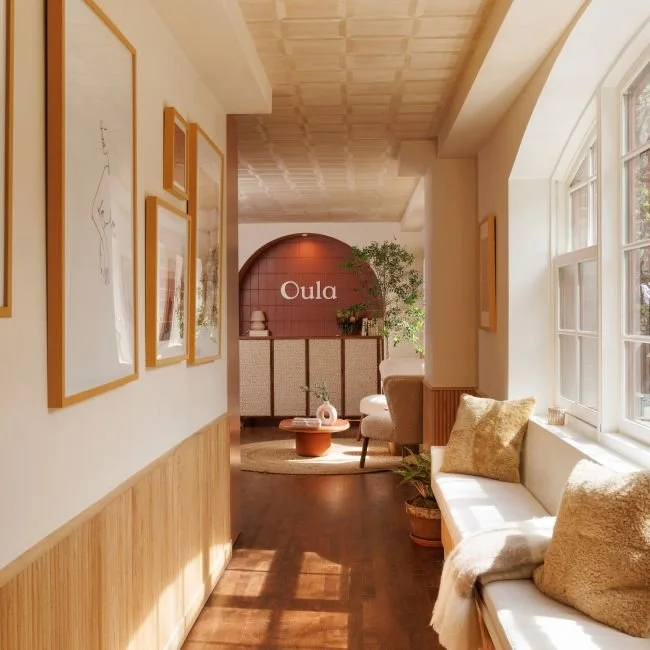
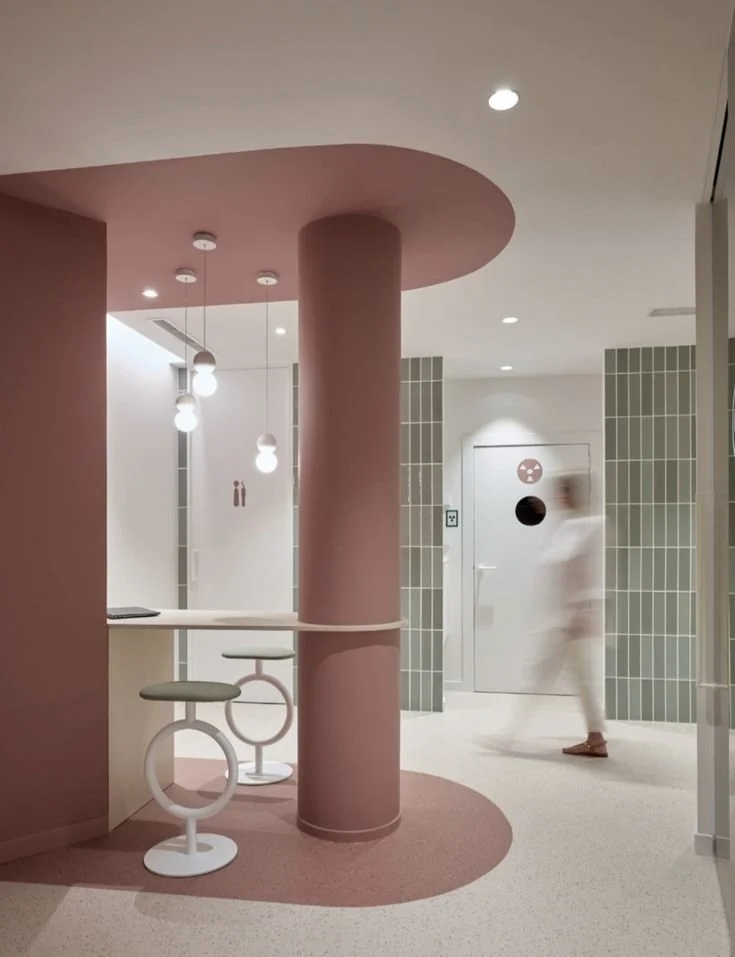
I understand that people like updated neutrals. Light colors, khaki, taupe. But there needs to be a little bit of color in there, something more joyful. I think these rooms should be treated more like a hospitality space. Think about how we'd design a spa.
Start with the basics. A mirror. A floor lamp, or if not a floor lamp, a sconce that gives you that same soft, low light instead of just the overheads. A window. That should be a no-brainer. You should be able to see outside. More cushioned guest chairs for whoever came with you. Soft textiles. Maybe even some music.
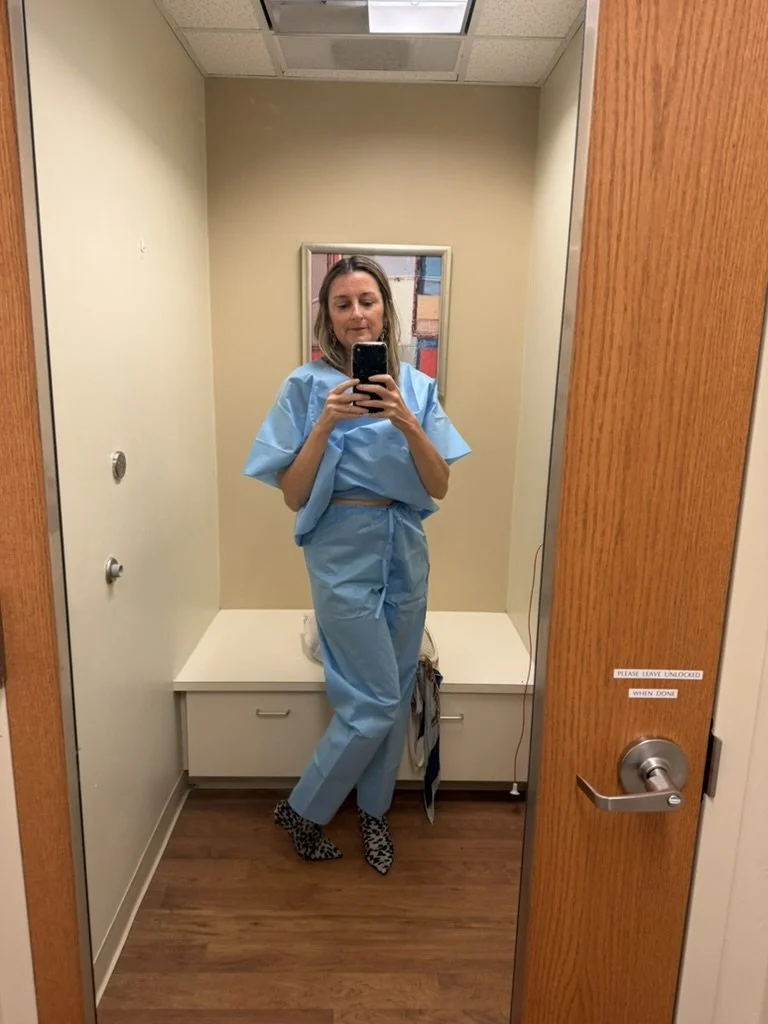
And the little things. I was in an exam room recently and I had trouble finding a tissue. Put out a nice box of tissues, a good one. And give women a place to put their things when they change. This is so important. You're getting a breast exam. You need somewhere for your purse, your clothes, your belongings, not a pile on a plastic chair.
The rooms could be a little bigger, but they should still feel intimate. I just wonder if there's a way to make it feel like something other than a box. I hate the word homey, but that's what I'm looking for.
The Chemotherapy Break Area: Privacy and Patient Dignity
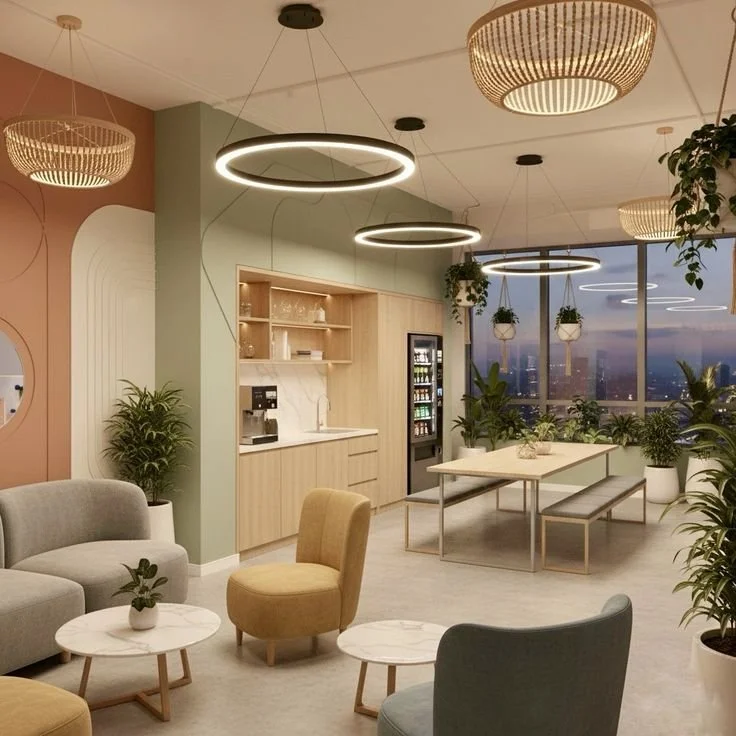
There wasn't a separate space for the break area. There was no door, just this weird back door, and no privacy. When you have your cold cap on, you have to get up and walk around in front of people in the waiting room, and it's so embarrassing. I don't want to walk around in my cold cap to go get a cup of ice or a cup of water. And why don't they have soda water? Soda water is the one thing you crave during chemo because you're so nauseous. Why don't they have more food and snacks? As much money as these places make on cancer.
Give patients their own break area with a door. Somewhere private you can walk to in your cold cap without everyone watching. Stock it with soda water, ice, real snacks. It's not a big ask. I don't want to sound angry, but I didn't feel cared for.
The Wait After Chemo Is Over: Survivors Deserve a Better Patient Experience
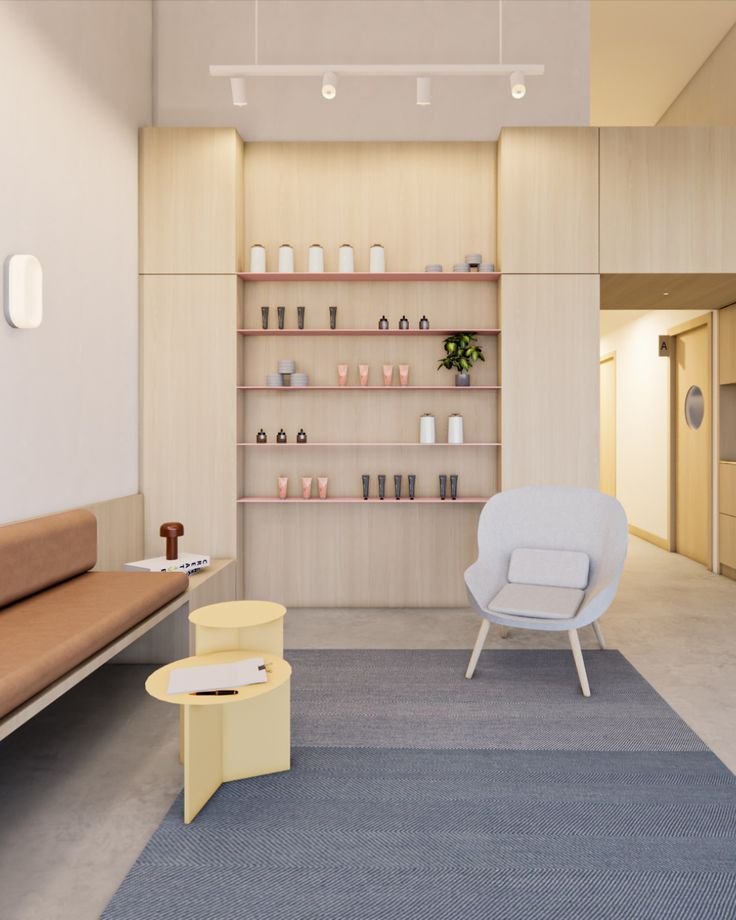
When you go back for your follow-up appointments, like getting checked for your tamoxifen, it can take hours to see your oncologist because they prioritize their chemotherapy patients. Which is great. But it's not fair to the survivors. Nobody tells you to bring your lunch, and there's nowhere to get food. You're starving to death.
At the very least, tell people to bring lunch. Better, give them somewhere to get food. Survivors are still patients.
Where This Leaves Me: The Future of Trauma-Informed Healthcare Design
I've thought about all of this so many times that I'd love to design a healthcare furniture and accessory line someday. An exam table. Trash cans and a recycling area that don't look like an afterthought. Tissue boxes. Casework. Guest chairs, benches, side tables. I think there's a way to thoughtfully design pieces into these rooms that make them feel calmer.
When I took that year off and looked at my life holistically, I finally saw all the pieces at once. What was working, what wasn't, where I was burning myself out. I think cancer centers deserve that same kind of honest look. Somebody needs to step back and see the whole experience, from the wig shop to the cold cap prep to the follow-up appointments years later, and design it for the woman walking through it.
Because cancer doesn't just go away. I'm still in these rooms, three and a half years later. And every time I sit in one, I notice what's working and what's not. I notice when there's no tissue. I notice when there's nowhere to put my purse. I notice when I'm starving in a waiting room for hours.
It's these exact experiences that shape the trauma-informed design I bring to every project now. Not just as a designer, but as someone who's been the patient. And honestly, I think that's made me better at what I do.
I want to be part of changing the way we design healthcare environments, especially for women navigating cancer treatment and recovery. If you're a healthcare organization, architect, furniture manufacturer, or someone who believes these spaces can be better, I'd love to start a conversation.
Because thoughtful design isn't just about how a space looks. It's about how it makes someone feel during one of the most vulnerable times in their life. And I believe we can do better.